

Podcast Analytics: Key Metrics for Business Growth in 2026
Still tracking your podcast performance by downloads alone? This guide breaks down the podcast analytics that actually matter for brands, from listener retention to attribution, and shows how to turn engagement data into smarter content and real business ROI.

Introduction
Are you still measuring your business podcast analytics with basic metrics like downloads and subscriber counts?
While these numbers may give you a glimpse of your podcast’s reach, they don’t tell the full story.
Today, the real value lies in understanding how deeply your audience engages with your content. Are they listening to entire episodes? Are they clicking on links, sharing your episodes, or taking actions that align with your business goals? These are the metrics that truly indicate success.
In this blog, we’ll dive into the key podcast analytics that every brand should track to measure real business impact. We’ll show you how to move beyond surface-level metrics and leverage data to refine your content, optimize engagement, and ultimately drive growth and ROI.
Podcast Analytics: Key Metrics Every Brand Should Measure
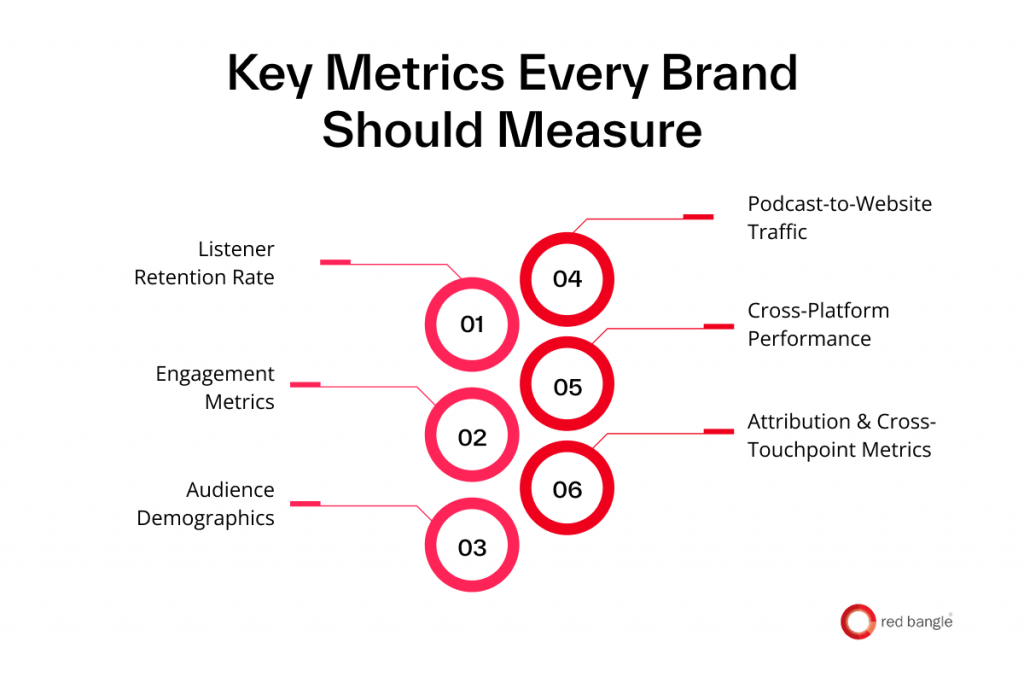
Podcast analytics provides essential insights into audience engagement, listener behavior, and content performance. By measuring key metrics like retention rates, downloads, and interactions, brands can optimize their podcast strategy.
Additionally, analytics tools track listener demographics, growth trends, and conversion metrics, allowing businesses to tailor content, improve retention, and enhance audience reach. Leveraging these actionable insights helps drive brand growth, increase engagement, and optimize marketing efforts.
Podcast analytics is crucial for any brand aiming to refine its content and boost podcast performance effectively. Here are the key metrics every brand should measure to track podcast success and optimize its performance.
1. Listener Retention Rate
Listener retention rate measures how well your podcast holds audience attention throughout an episode. It looks at how many listeners continue listening as the episode progresses, rather than whether they finish it entirely. This makes retention a strong indicator of pacing, structure, and sustained relevance.
It’s different from completion rate, which specifically measures the percentage of listeners who reach the end of an episode. While completion rate tells you how many listeners finished the episode, retention rate shows where and why listeners drop off along the way.
How to Measure Listener Retention Rate
- Use Retention Graphs: Platforms like Spotify and Apple Podcasts provide retention graphs that show how listener numbers change across the duration of an episode. These graphs help you see exactly where listeners begin to drop off so that you can understand your audience behavior.
- Identify Drop-off Points: Pinpoint specific moments where listeners stop listening. These drop-offs can highlight issues with episode openings, pacing, segment transitions, or content relevance.
- Compare Across Episodes: Track retention trends across multiple episodes to understand what holds attention better. Certain formats, themes, or episode lengths may consistently retain listeners longer.
Improving listener retention helps increase engagement, strengthens audience loyalty, and improves the overall effectiveness of your podcast as a brand channel.
For example, if listeners drop off early, you might experiment with tighter introductions, clearer framing of the episode’s value, shorter runtimes, or more structured segments. The goal is to keep listeners engaged for as much of the episode as possible, not just to push them to the final minute.
In short, completion rate shows who finishes an episode, while retention rate shows how attention rises and falls throughout it.
2. Engagement Metrics (Comments, Shares, & Social Media Mentions)
Engagement metrics track how often your podcast is shared, commented on, or mentioned across social media platforms and podcast networks. It also encompasses direct interactions on podcast platforms like user ratings, comments, and reviews.
How to Measure Engagement Metrics
- Measure Direct Interactions on Podcast Platforms: Many podcast platforms offer data on the number of comments, ratings, and reviews your podcast receives. These metrics are valuable for understanding how your listeners feel about each episode.
- Monitor Social Mentions: Use social listening tools like Hootsuite or Sprout Social to track mentions, hashtags, and discussions about your podcast across social media platforms like YouTube and LinkedIn.
- Track Shares and Comments: Pay attention to how often episodes are shared on social media platforms. If listeners are sharing your episodes frequently, it’s a sign that your content is spreading beyond your immediate audience.
- Engage with Your Audience: Encourage your listeners to comment, share, or even participate in online discussions about the podcast. This can further amplify engagement and help build a community around your podcast.
Engagement metrics, like comments, shares, and social media mentions, reveal how well your content resonates with your audience.
High engagement indicates your podcast is sparking conversations and reaching new listeners, boosting visibility and brand recognition. By identifying the topics or formats that generate the most interaction, you can refine your content to further increase reach, foster loyalty, and strengthen long-term growth.
3. Audience Demographics
Understanding your audience’s demographics helps you tailor your content to suit their preferences and needs. For businesses, this data is essential for shaping marketing strategies, creating more personalized content, and targeting the right audience segments.
Knowing who your listeners are further allows you to fine-tune your messaging and optimize promotional efforts to maximize engagement and conversions.
How to Understand Audience Demographics?
- Use Platform Analytics: Platforms like Apple Podcasts, Spotify, and Google Podcasts provide demographic data, including listener location, age, and gender.
- Third-Party Tools: Tools like Podtrac can provide additional demographic insights, helping businesses gather more detailed information about their audience.
- Analyze Trends Across Episodes: Track how demographics change across different episodes or seasons to identify trends or shifts in listener behavior.
Ultimately, the goal is to use demographic data to refine your brand messaging, making your podcast more relevant and appealing to your target audience.
4. Podcast-to-Website Traffic
Podcast-to-website traffic tracks how much traffic your podcast generates to your website. When listeners move from your podcast to your website, it indicates that your content is compelling enough to inspire further engagement with your brand.
Whether it’s making a purchase or subscribing to a service, this metric connects podcast efforts to measurable business outcomes.
How to Measure Podcast To Website Traffic?
- Use UTM Tracking Links: Include UTM links in your podcast’s show notes to track the traffic your podcast is generating.
- Monitor Traffic in Google Analytics: Use Google Analytics to track the specific sources of traffic to your website and measure how podcast listeners interact with your site.
- Measure Conversions: Once you track podcast traffic, also measure conversions like product sign-ups or purchases to see the full impact of your podcast.
Track how well each episode drives traffic to your website and correlate that with your business goals, like product sign-ups or purchases. Then, if certain topics or episode formats lead to higher traffic, you can tailor future content to reflect that.
Include strong CTAs in your podcast, directing listeners to a specific landing page, where they can take an action like subscribing, purchasing, or downloading a freebie. Finally, measure which episodes drive the most traffic and use those insights to structure future episodes with similar CTAs.
5. Cross-Platform Performance
Not all platforms perform the same way for every podcast. Understanding cross-platform performance is crucial for businesses aiming to maximize reach and optimize distribution strategies.
For instance, if your podcast gets significantly more listens on Spotify than on Apple Podcasts, you can focus your promotional efforts on Spotify to capitalize on that platform’s strength. This insight ensures you’re investing your resources where they will have the most impact, driving the most engagement and growth.
How to Measure Cross-Platform Performance
- Use Third-Party Tools: Tools like Podtrac aggregate data from multiple platforms, giving you a unified view of how your podcast is performing across various channels.
- Track Platform-Specific Analytics: Each podcast platform offers its own analytics, which you can monitor to assess the number of downloads, listener engagement, and growth trends on that platform.
- Compare Across Episodes and Platforms: Compare the performance of episodes across platforms to understand which types of content perform best on each. This allows you to tailor your content or distribution strategy accordingly.
Use cross-platform insights to fine-tune your promotional strategy. If your podcast performs better on Spotify than on Apple Podcasts, focus your marketing efforts on Spotify. Alternatively, if one platform generates higher listener engagement, you can tailor your content or distribution strategy for that platform.
6. Attribution & Cross-Touchpoint Metrics
Attribution and cross-touchpoint metrics track how podcast listeners engage with other marketing channels, such as your website, social media, and email campaigns, to understand their overall experience.
Cross-touchpoint tracking helps you connect the dots between different marketing channels, revealing how podcasting contributes to the broader marketing ecosystem and enhances the overall customer journey.
Attribution metrics allow you to trace listener actions from the podcast to your website, ensuring your podcast content aligns with broader sales funnels.
How to Measure Attribution & Cross-Touchpoint Metrics
- Use Multi-Touch Attribution Tools: Leverage tools like HubSpot or Google Analytics to track the customer journey across multiple channels. These tools can help you see how listeners engage with your podcast and other touchpoints, such as your website or social media.
- Track Listener Actions Post-Podcast: Monitor how listeners interact with your website or email campaigns after they engage with your podcast. For example, track if they visit product pages, make purchases, or sign up for your newsletter.
- Evaluate Cross-Touchpoint Impact: Analyze how your podcast influences behavior on other platforms and measure the combined effect of your podcast and other marketing efforts on conversions.
By tracking attribution and cross-touchpoint metrics, you can better understand how your podcast drives conversions across multiple channels.
For instance, if you notice a spike in website visits or product sign-ups after a specific episode, you can create more content aligned with that topic, further boosting engagement and conversions. This helps refine your marketing strategy by making each touchpoint more impactful.
By focusing on these metrics and continuously adjusting your approach, you’ll be better equipped to reach your target audience, enhance your podcast strategy, and improve your podcast content.
If you want assistance in transforming your podcast into a powerful tool for business success, we’re here to help.
At Makerrs, we not only help you define the metrics to track but also ensure your podcast content is structured for maximum impact. Whether it’s designing a captivating episode structure or researching industry-specific trends, we ensure that every episode is optimized for audience engagement.
Now, let’s explore how you can use these insights to drive better business outcomes.
How To Use Podcast Analytics To Drive Business Results
By leveraging the data from your podcast analytics, you can fine-tune your content, optimize your marketing efforts, and drive more business results. Here’s how to use podcast analytics to improve performance, increase engagement, and achieve your business objectives.
1. Use Listener Feedback to Improve Your Content
Listener feedback offers valuable insights into how your content resonates with your audience. In particular, it helps you refine topics, pacing, and episode structure based on what your audience wants. By regularly gathering feedback, you can ensure your podcast stays relevant and engaging.
Encourage feedback through email marketing, surveys, comments, or social media. Analyze common themes and use them to adjust your content. For example, if listeners request more depth on certain topics, consider creating a series or expanding those discussions in future episodes. This keeps your podcast aligned with your audience’s interests.
2. Improve Retention and Encourage Growth
Retention rates show how well your content keeps listeners engaged. Therefore, analyzing these trends helps you structure your episodes for better engagement.
For instance, use retention graphs from platforms like Spotify to pinpoint where listeners drop off. Adjust content pacing, shorten intros, or restructure segments based on this data. Refining these areas will help improve retention, fostering listener loyalty and organic growth.
3. Track Your Marketing Efforts
Measuring the effectiveness of your marketing campaigns is crucial to understanding their impact. Podcast analytics show which channels, like social media, email, or paid ads, are driving the most listens, helping you optimize your marketing strategies.
Use UTM links to track traffic from your marketing efforts. Combine this with Google Analytics to see how listeners from specific campaigns behave. Analyze the results and focus more resources on the channels that drive the best outcomes for your podcast.
4. A/B Testing and Optimizing Episode Titles
Optimizing your episode titles is key to attracting more listeners. A/B testing helps you determine which titles engage your audience and increase click-through rates, ensuring that your content gets noticed.
For example, test different title formats (curiosity vs. descriptive) and track performance using A/B testing tools. Measure engagement rates and identify the titles that resonate most. Apply these insights to future titles and include relevant keywords to boost discoverability.
When it comes to measuring podcast success and driving business results, the right tools are essential. Let’s dive into the best tools for measuring and tracking podcast performance.
Best Tools to Track Podcast Analytics for Businesses
The following tools are some of the most effective for tracking podcast performance, measuring key metrics, and optimizing your strategy. These platforms provide actionable insights into your audience’s behavior, helping you make data-driven decisions that lead to better engagement and higher ROI.
1. CoHost
CoHost is designed for B2B and enterprise marketers, offering deep audience insights such as listener companies, roles, and decision-maker profiles. This makes it especially valuable for businesses using podcasts in account-based marketing (ABM) strategies.
- Tracks audience demographics, engagement patterns, and attribution metrics
- Helps identify target accounts and decision-makers, making it easier to tailor content and marketing strategies
- Provides cross-platform performance data to optimize podcast outreach and distribution
2. Transistor
Transistor provides insights into overall performance across various shows. It offers network-wide data, subscriber trends, and episode performance across platforms. For businesses looking to scale, Transistor helps track performance across all episodes and shows from a centralized platform.
- Tracks distribution metrics, including performance across Spotify and Apple Podcasts
- Provides listener demographics and geographic data
- Helps businesses scale by tracking network-wide podcast performance
3. Podtrac
Podtrac is a powerful tool for measuring podcast audience reach and comparing your podcast’s performance to industry benchmarks. It provides detailed audience measurement, monthly trends, and rankings, helping businesses see how their podcasts stack up against competitors in their industry.
- Tracks industry rankings, monthly trends, and audience reach data
- Helps businesses compare their performance to competitors
- Provides insights to optimize podcast content and promotional strategies
To maximize your podcast’s impact, it’s crucial to track the right metrics and use the right tools. These tools provide the necessary data to understand audience behavior, optimize content, and drive business growth. By implementing them, businesses can refine their podcasting strategies, improve engagement, and achieve measurable results.
Conclusion
For businesses that want to harness the full potential of podcasts in 2026, it’s time to dig deeper into the right podcast analytics metrics and uncover actionable insights that lead to measurable results.
By focusing on key metrics like listener retention, engagement, and audience demographics, you can make informed, data-driven decisions that optimize your content strategy, enhance listener loyalty, and increase ROI.
If you’re ready to maximize the impact of your podcast and see tangible business outcomes, collaborate with our team at Makerrs.
At Makerrs, we go beyond just analyzing the numbers. We specialize in transforming these insights into growth strategies that drive both engagement and conversions.
From designing a captivating episode structure to ensuring your podcast content is aligned with your business goals, our expertise in podcast production guarantees that every episode delivers real business outcomes.