

Create a Winning Podcast Strategy: Grow Your Audience
A successful podcast starts with a solid strategy. This guide breaks down how to build a clear, audience-led podcast strategy that aligns with business goals, defines intent, shapes content decisions, and turns your podcast into a long-term brand and growth asset.

Introduction
Podcasting didn’t start as a marketing channel. It became one.
Today, brands launch podcasts to shape conversations in their category, not to simply add another content stream. A podcast now sits alongside brand films, campaigns, and long-form IP as a serious media investment, competing for attention, budget, and leadership buy-in.
Yet despite its strategic role, many podcasts lose direction at the very beginning.
Episode ideas are brainstormed, guests are shortlisted, and publishing schedules are locked in before the podcast has a clear role within the brand. What follows is consistent output, but unclear impact.
A strong podcast strategy prevents this. It defines who the podcast is for, what it is meant to achieve, and how it supports broader brand or growth goals. It ensures the podcast is built with intent.
In this blog, we break down how to build a podcast strategy that is grounded in audience insight, aligned with your business objectives, and designed to create lasting value.
7 Ways to Craft a Winning Podcast Strategy
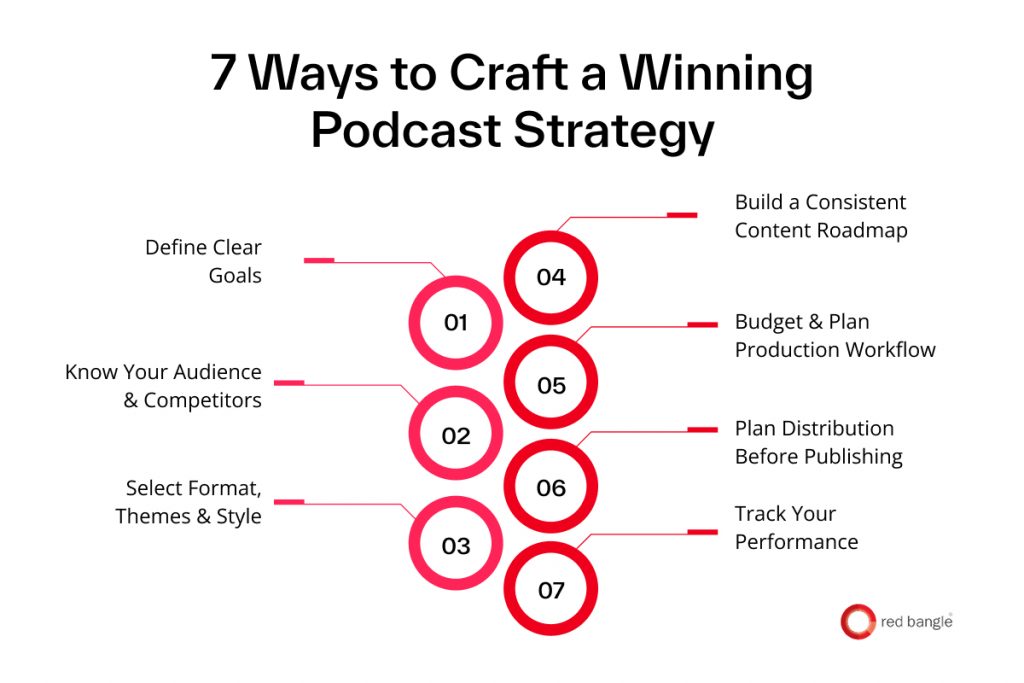
A successful podcast strategy aligns content with audience needs, drives engagement, and supports business goals. It begins by setting clear objectives, such as growing your audience or building brand authority.
Consistent, high-quality content that resonates with listeners is essential, while SEO optimization enhances discoverability across platforms. Monetization strategies like sponsorships and listener donations ensure profitability.
Regularly analyzing performance helps refine your approach for sustained growth. With a well-structured strategy, you can effectively attract, engage, and retain listeners while maximizing your podcast’s reach and impact.
Here’s how you can structure your podcast strategy:
1. Understand Your Audience and Analyze Competitors
To produce relevant podcast content, you must deeply understand who your listeners are and what they want. Successful podcasts aren’t just about conversations; they’re about speaking to the needs and desires of a specific audience.
- Build Audience Personas: Identify your core listener. What problems are they trying to solve? What topics do they actively seek out? Which platforms do they use to consume long-form content?
For example, a senior marketing audience may prefer insight-led conversations or narrative case studies, while a creative community might gravitate towards culture-driven storytelling or behind-the-scenes formats. These insights shape not just content, but the kind of IP you are building.
- Analyze Competitors: Understanding your competition is key to identifying what works and where opportunities lie.
Take a look at popular podcasts in your niche: What types of topics are they covering? What is the tone of their content? How are they engaging with their audience? What formats are they using? Use this analysis to find gaps in the market.
- Spot Emerging Trends: If you’re in a fast-changing sector like tech or finance, staying ahead of trends is critical. Look for opportunities to create content around new developments or cutting-edge technologies before they become mainstream topics.
For instance, podcast episodes focused on the implications of artificial intelligence or blockchain might resonate with an audience interested in staying ahead of industry trends.
At Red Bangle, we take this a step further by combining industry research with social listening and AI-led insights. By analyzing conversations across platforms like LinkedIn, X, and industry forums, we identify what your target audience is actively discussing, questioning, or reacting to in real time.
This helps surface emerging themes, shifts in sentiment, and early signals that may not yet show up in traditional reports or keyword data. We then feed those insights directly into episode ideation and scripting to create podcast content that feels timely and relevant.
Alongside this, we also analyze competitors and category narratives to help define clear audience personas based on real interests, pain points, and goals, ensuring each episode is strategically positioned and deeply resonant.
2. Define Clear Goals That Anchor Your Podcast’s Purpose
A strong podcast strategy does not start with goals in isolation. It starts with clarity of intent.
Before defining what the podcast should achieve, you need to make a clear strategic call on what role it should play within your brand’s broader ecosystem. Without this, goals tend to be generic and disconnected from real audience behavior.
- Define Intent Before Goals: Start by defining the podcast’s intent. Is it meant to build category authority, shift brand perception, deepen engagement, or open up a new audience segment?
Intent helps narrow focus and prevents the podcast from trying to do too many things at once. Your podcast’s role should be aligned with your broader business and brand objectives, giving it a strategic, measurable purpose.
- Set Goals That Reflect Strategy: With intent defined, goals become more meaningful. Instead of targets like “more listeners,” anchor goals to outcomes that matter, such as growing the share of voice within a category or driving repeat engagement from a defined audience segment.
These goals should still be measurable and time-bound, but grounded in audience relevance.
- Align Goals with Business and Brand Outcomes:
For B2B brands, your podcast should serve as a tool to accelerate demand generation, build leadership credibility, and strengthen your sales pipeline. At scale, it helps shape category narratives, support ABM motions, and influence complex B2B buying decisions.
Ensure that the podcast directly contributes to your broader business outcomes, whether that’s generating inbound leads, supporting sales outreach, or fostering long-term demand through thought leadership.
Now, let’s understand how to choose the right podcast format, theme, and style to best convey your brand’s message.
3. Choose the Right Podcast Format, Theme & Style
The format, theme, and style of your podcast play a significant role in shaping your listeners’ experience. This is where your podcast can stand out or blend into the noise of countless other shows.
- Select the Right Format: Decide between solo commentary, interviews, storytelling, or a hybrid approach.
- Solo podcasts are great for thought leadership.
- Interviews can provide diverse perspectives and guest-driven content.
- Storytelling formats help create emotional connections with listeners.
- Develop a Consistent Tone: Once you’ve chosen a format, ensure that your podcast’s tone aligns with your brand. A B2B podcast might lean towards a professional and informative tone, while a creative or lifestyle podcast may have a more casual approach.
- Create Theme Pillars: Define the main themes or topics your podcast will address. This helps structure your episodes and keeps content consistent.
For instance, if your podcast is aimed at B2B leaders, your theme pillars could include industry trends, leadership perspectives, go-to-market strategies, customer success stories, and the future of your category.
4. Build a Content Roadmap That Keeps You Consistent
Consistency is essential in podcasting. A content roadmap ensures your episodes are aligned with your goals and theme, keeping your content relevant and engaging.
- Plan Topics: Podcast topics should be chosen the same way high-performing content is planned: using SEO and search demand.
Start by identifying the keywords, questions, and themes your audience is actively searching for, then map those insights to your podcast’s core themes. Group related topics into focused arcs or mini-series so each episode builds toward a larger, discoverable content IP.
- SEO-Friendly Titles and Descriptions: Optimize your titles and episode descriptions for SEO. This improves your discoverability on platforms like Apple Podcasts and Spotify.
For example, instead of naming an episode “Episode 15,” use a more descriptive and keyword-rich title like “How to Build a Marketing Strategy for Startups: A Deep Dive.”
- Guest Strategy: If you plan to feature guests, consider how their expertise will add value to your content and expand your podcast’s reach. A well-curated guest strategy not only improves the quality of your content but can also help in cross-promotion when your guests share the episode with their followers.
5. Budget Resources and Create a Production Workflow
Producing a high-quality podcast requires a thoughtful allocation of time, money, and resources. Setting up a streamlined production workflow will ensure your content remains high-quality.
- Allocate Resources: Determine if you need to partner with a professional podcast production agency for tasks like editing or if you can manage everything in-house. For example, hiring a podcast editor might be necessary if you want to maintain a high level of sound quality.
- Decide on Recording Setup: Whether you record remotely or in a studio, the priority is consistency and broadcast-quality output.
For virtual setups, using the right tools can reduce technical risk and maintain quality across geographies. Platforms like Riverside enable high-quality local audio and video capture even with remote guests, while hosting tools like aCast support reliable distribution and performance tracking.
If you’re planning to have a global podcast with guests from different locations, partnering with a podcast production agency like Red Bangle can help. With our global production capabilities and post-production support, we can help you maintain a professional podcast quality, no matter where your team is located.
- Build A Workflow: Finally, set a routine for scripting, recording, editing, and publishing episodes. If you are running your podcast solo, consider using podcast scheduling and editing tools to streamline the process.
6. Plan Your Distribution Strategy Before You Publish
Your podcast won’t gain traction without a solid distribution strategy.
To ensure your content reaches the right audience, you need to choose the most effective platforms, optimize your metadata for discoverability, and strategically leverage social media and other channels to expand your reach.
- Optimize Metadata: Use SEO-friendly metadata for each episode. This includes titles, descriptions, and tags that improve your podcast’s visibility on platforms like Spotify and Apple Podcasts.
- Multi-Platform Publishing: Don’t limit your podcast to a single platform, but be intentional about where you show up. Repurpose content based on channels that align with your brand and audience.
For example, Instagram works well for consumer brands that benefit from short-form, visual storytelling, while LinkedIn is better suited for founders and B2B brands looking to drive thought leadership and professional engagement.
Choosing the right platforms ensures your podcast expands reach and discoverability without diluting brand relevance.
- Repurpose Content: Create short-form content like clips or soundbites to share on social media. Sharing episode snippets on LinkedIn, Instagram, or X, for example, can spark interest and drive traffic to your full episodes.
For example, at Red Bangle, we take a hands-on, end-to-end approach to podcast distribution, working through a repeatable framework that ensures your content reaches and resonates with the right audience.
We begin by researching your audience and context, analyzing what will help the podcast stand out, and conceptualizing formats aligned with the brand’s intent. From there, we produce and package audio-visual assets, publish them across the right channels, and repurpose each episode into platform-native formats.
We then analyze performance to adapt the next cycle and produce, package, and publish again with a sharper focus, ensuring your podcast builds sustained brand value.
Now, to ensure your podcast strategy evolves and continues to resonate with your audience, it’s essential to monitor its performance regularly.
7. Use Podcast Analytics to Track Performance
Publishing your podcast is just the beginning. To drive sustained growth and success, it’s crucial to continuously assess your podcast’s performance. Analytics provide key insights into what’s resonating with your audience and where there’s room for improvement, helping you refine your content and strategy for even greater impact.
- Monitor Key Metrics: In addition to full-episode metrics, evaluate the total reach of each episode across platforms.
A single episode often generates multiple assets such as short clips, quotes, or videos, each contributing to visibility and engagement in different contexts.
Tracking aggregate reach, engagement, and interaction across social channels helps you understand what themes, formats, and moments resonate most, allowing you to refine future episodes and repurposed content with greater precision.
- Iterate and Improve: Use this data to refine your content, adjust your distribution strategy, and optimize future episodes.
Remember, a podcast strategy is a dynamic plan that evolves over time.
Keep refining your approach with data, feedback, and audience insights to ensure long-term growth and engagement. Whether you’re starting from scratch or refining an existing podcast, these strategies will help you create a podcast that stands out.
Now, as you refine your podcast strategy, it’s essential to align it with your unique business model to ensure maximum impact and relevance.
Tailoring Podcast Strategy To Your Business Model
A successful podcast strategy must be tailored to your specific business model.
Each type of podcast serves a distinct purpose, whether you’re a corporation looking to build brand credibility, a B2B company aiming to educate, or an industry expert building a personal brand.
Here’s how to adapt your podcast strategy based on your business model for optimal results.
1. Corporate Podcast Strategy
For corporations, a podcast is a strategic tool for showcasing leadership, building brand credibility, and communicating internal and external messages. To make the most of your corporate podcast:
- Feature key executives to discuss industry trends and company vision.
- Use your podcast to share industry insights and showcase your expertise, reinforcing your company’s authority in the market.
- Share behind-the-scenes stories and employee experiences to connect with listeners on a personal level and create a relatable brand identity.
- Invite guests from different industries to broaden your reach and engage a wider audience with diverse perspectives.
Example: Stanley Black & Decker’s Video Series:
For instance, Stanley Black & Decker uses a video series to communicate their purpose-driven vision around digital transformation. Their content focuses on Industry 4.0, innovative manufacturing, and how digital tools are reshaping their industry.
While this is video content, it exemplifies how a corporate podcast or video series can align with your company’s broader strategy and help strengthen your brand voice.
2. Brand Podcast Strategy
For marketers, a podcast strategy should focus on educating buyers and decision-makers, addressing industry challenges, and positioning your business as a solution provider. Here’s how to tailor your brand podcast for maximum effectiveness:
- Create content that addresses key challenges faced by your target industry or business segment, offering insightful solutions.
- Bring in industry experts to provide credibility and depth to your content, establishing your podcast as a trusted resource.
- Tailor your content to meet the specific needs of your target accounts or industry verticals, ensuring relevance to your audience.
- Discuss emerging trends, best practices, and case studies that reinforce your brand as an industry leader.
3. Custom Podcast Strategy
For businesses and brands, your podcast serves as a strategic tool for showcasing your leadership, communicating your values, and building a deeper connection with your target audience. It’s an opportunity to demonstrate your expertise, share industry insights, and position your brand as an authority in your field.
Here’s how you can create a podcast strategy that helps you achieve it:
- Focus on your brand’s unique positioning and strategic vision to create content that reinforces your leadership in the industry and sets your business apart from competitors.
- Ensure your brand’s tone and messaging are consistent across episodes, reinforcing your business’s core values and fostering trust with your audience.
- Ensure the tone and style of your podcast match your brand’s core values and message, creating consistency across all content.
By aligning your podcast with your audience’s needs and your business objectives and consistently delivering valuable content, you can transform your podcast into a powerful tool for strengthening relationships and achieving your business goals.
With a tailored strategy in place, the next step is to focus on expanding your reach and growing your audience.
How to Grow Your Podcast’s Reach: Growth Tactics
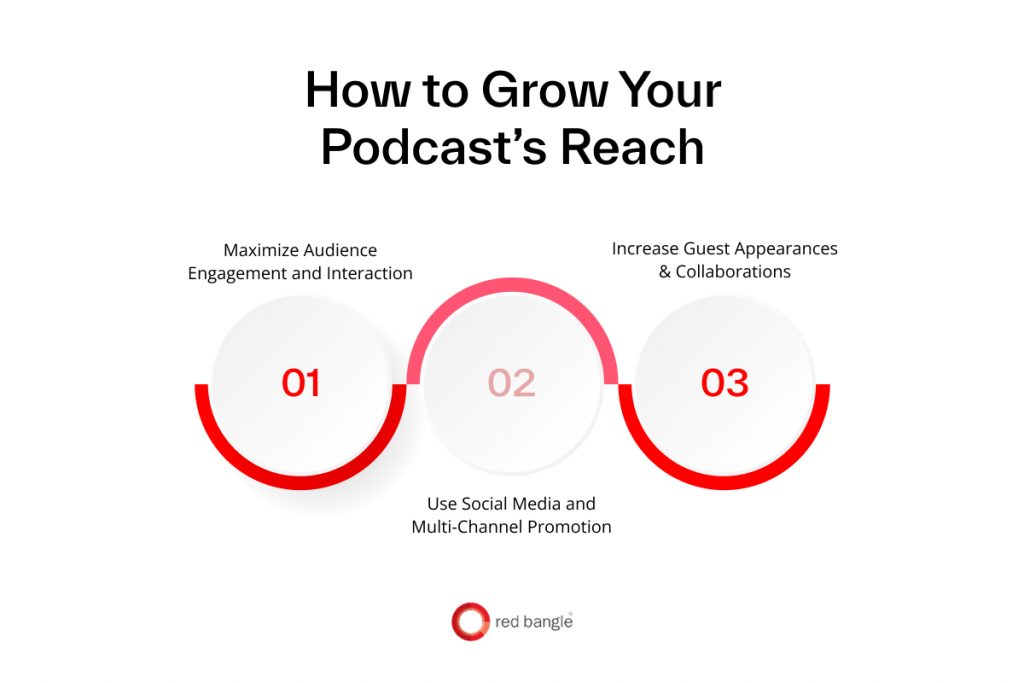
Expanding your podcast’s reach requires a blend of audience engagement, promotion, and strategic partnerships. These tactics will help you attract new listeners, boost retention, and build long-term growth.
1. Maximize Audience Engagement and Interaction
Building a dedicated audience is about more than publishing episodes; it’s about earning attention and reinforcing brand relevance over time. For large brands, engagement should strengthen authority and recall.
- Anchor episodes in audience and market intelligence, using customer insights, industry signals, and category-level challenges to shape discussions that feel timely and valuable.
- Design episodes around high-impact themes and perspectives your audience already cares about, encouraging sharing and repeat listening.
- Extend conversations through existing brand channels such as LinkedIn, owned media, and events.
- Include deliberate calls-to-action that guide listeners toward deeper brand touchpoints, related content, or strategic narratives, rather than generic engagement actions.
2. Use Social Media and Multi‑Channel Promotion
Your podcast isn’t limited to just your hosting platform. By expanding your reach across multiple channels, you can expose your podcast to new audiences and drive traffic from social media platforms, email newsletters, and more.
- Distribute bite-sized clips and short video excerpts on LinkedIn and YouTube Shorts, where B2B audiences actively engage with leadership insights and expert conversations.
- Use teaser videos and highlight reels to build anticipation ahead of full episode releases.
- Publish full-length episodes and optimized audio content on Spotify and Apple Podcasts.
- Repurpose key moments into short, shareable snippets, quote-led visuals, and audiograms to extend reach across relevant channels and reinforce recall.
3. Guest Appearances, Collaborations & Cross-Promotion That Work
Strategic collaborations are key for expanding your podcast’s reach and aligning your brand with industry leaders and experts. Partnering with influential figures in your sector or collaborating with other reputable businesses helps elevate your podcast’s credibility and amplify its impact.
- Invite domain experts to your podcast
- Get featured on relevant podcasts to reach new, interested audiences.
- Collaborate with industry experts and thought leaders to cross-promote valuable content and expand your podcast’s reach within your business sector.
- Share each other’s content on social media or in newsletters to tap into each other’s audience.
Conclusion: Build a Podcast That Leads Conversations
Creating a podcast that stands out requires more than simply recording episodes. It involves understanding your audience, aligning your content with your business goals, and delivering consistent value that keeps listeners coming back.
As you begin implementing these strategies, remember that podcasting is an ongoing process of refining and adapting.
Focus on delivering value with each episode, engage your audience through interactive content, and leverage cross-promotion to expand your reach. Most importantly, ensure that your podcast stays aligned with your larger brand goals.
At Red Bangle, we understand the power of a well-crafted podcast strategy.
We help brands like yours create podcast series that lead conversations.
If you’re ready to position your brand with authority, build an engaged audience, and scale your podcast with ease, we’re here to guide you every step of the way.
Let’s create a podcast that transforms your brand into a trusted industry leader.